
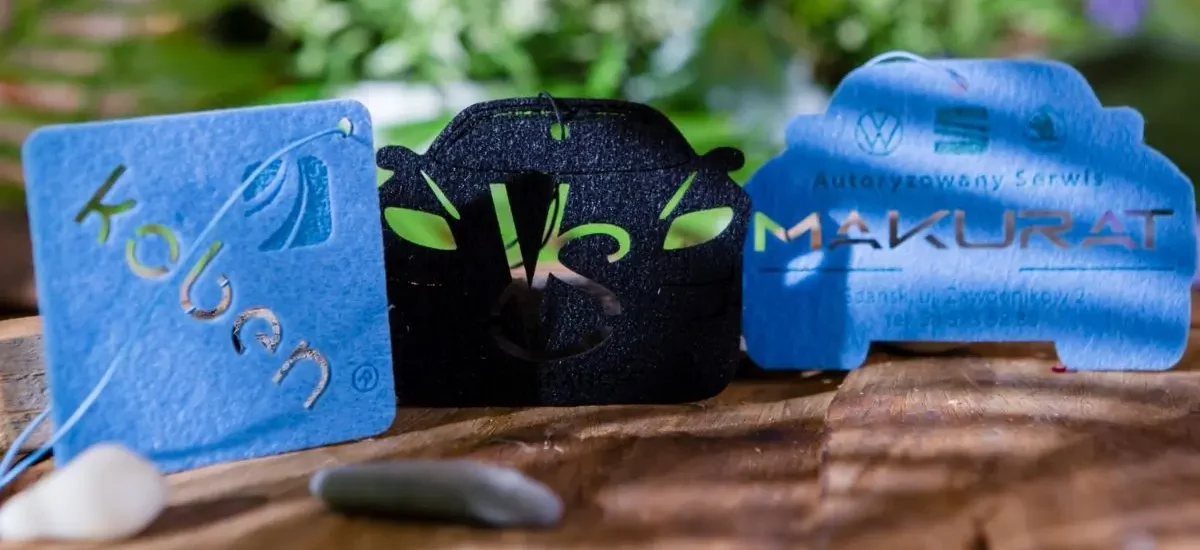
This guide shows how a brand can design custom car air fresheners that look, feel, and even “behave” like the rest of their identity, from logo use to scent choice to packaging.
What should the brand want custom car air fresheners to achieve?
They should decide the job before the design. Custom car air fresheners might be meant to increase recall, drive referrals, support an event, or add a premium “unboxing” moment.
If the goal is awareness, bold shapes and high contrast usually help. If the goal is loyalty, a refined finish, subtle branding, and a signature scent can feel more “kept” than “thrown away.”
Who will use the custom car air fresheners, and where will they see them?
They should design for the real environment: a car interior with changing light, clutter, and limited attention. Custom car air fresheners are often viewed from arm’s length, while driving, and against busy backgrounds.
That means tiny type, low-contrast logos, and overly detailed illustrations can disappear. If the audience is younger and expressive, louder color and playful shapes may fit. If they’re luxury buyers, restraint often reads as quality.
Which brand elements should be translated into the design?
They should pick two or three identity anchors and make them unmistakable. With custom car air fresheners, the strongest anchors tend to be color palette, logo mark, and illustration style.
If their brand relies on typography, they should use it sparingly and large enough to read. If their brand is icon-led, the icon can become the hero shape. Consistency matters more than adding every brand element at once.
What shape and size best fit the brand identity and practical use?
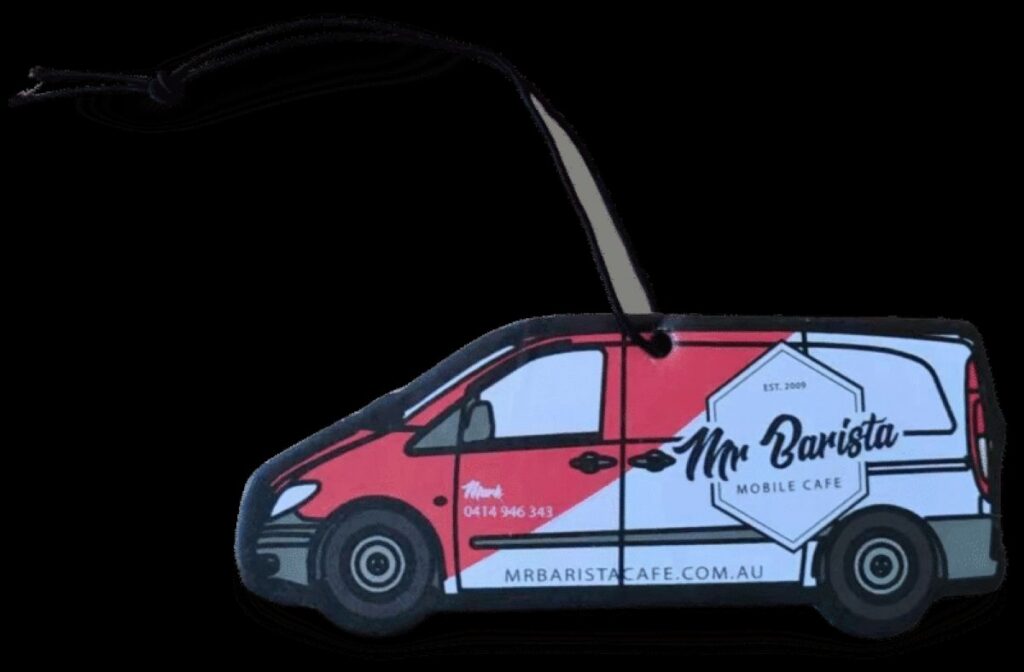
They should choose a silhouette that reinforces recognition and avoids annoyance. Custom car air fresheners commonly use trees, circles, and rectangles, but a brand-shaped cutout can be more memorable if it stays simple.
They should also consider swing, clearance, and visibility. If it’s too large, it can feel intrusive. If it’s too small, branding vanishes. A clean outline with a distinct top hole placement often looks more intentional.
How should the scent connect to the brand, not just “smell nice”?
They should treat scent like a brand asset. Custom car air fresheners can mirror what the brand already stands for: citrus for energetic and modern, linen for clean and minimalist, leather or oud for premium, and pine for outdoorsy.
They should also consider seasonality and sensitivity. A “signature” option plus one limited edition can keep things fresh without confusing customers. The scent should support the identity, not compete with it.
What finishes and materials make the design feel on-brand?
They should match the tactile experience to the brand’s positioning. Custom car air fresheners can feel budget, mid-tier, or premium depending on paper thickness, print quality, and finish.
A matte finish often feels modern and understated. Gloss can feel bold and loud but may reflect light in cars. If the brand sells premium goods, thicker stock and sharper color control tend to signal “worth keeping.”
How should they design the front and back without clutter?
They should prioritize one clear visual message per side. For custom car air fresheners, the front usually carries the hero: logo mark or illustration. The back can carry a short line, QR code, or social handle, but only if it stays readable.
They should avoid stuffing in phone numbers, full addresses, and long taglines. A small QR that lands on a trackable page can do more than a wall of text.
How can packaging reinforce the brand identity and improve perceived value?
They should treat packaging as part of the product, not an afterthought. Custom car air fresheners in a branded sleeve or carded bag can feel more giftable and legitimate.
Packaging is also where compliance and clarity can live: scent name, ingredients, and usage notes. If the brand wants shareability, a clean front panel plus a simple “how to hang” graphic can encourage customers to post it.
Other Resources : Reducing risks when modernising packaging
What should they test before producing a full run?
They should test visuals, scent strength, and durability in real cars. Custom car air fresheners can look perfect on a screen but fail in sunlight, heat, or low-contrast interiors.
A small pilot batch helps them learn: whether the hole tears, whether the scent is too strong, and whether the colors shift. They should also check that the logo remains legible at a glance from the driver’s seat.
How should they ensure the custom car air fresheners stay consistent across campaigns?
They should create a mini spec sheet and reuse it. Custom car air fresheners stay on-brand when the brand locks a few rules: approved colors, minimum logo size, scent naming style, and preferred shapes.
If they plan seasonal drops, the core structure should stay the same while one element changes, like scent name color or a secondary illustration. That balance keeps recognition while still feeling new.
What’s a simple checklist they can follow to finalize the design?
They should confirm the identity is clear, the product is usable, and the experience feels intentional. Custom car air fresheners work best when the design is simple, readable, and scent-aligned.
Final checklist:
- One hero brand cue chosen (color, mark, or illustration)
- High contrast for in-car visibility
- Simple silhouette that doesn’t obstruct
- Scent tied to brand personality
- Front is clean, back is minimal
- Packaging supports value and clarity
- Pilot batch tested in real conditions
More to Read : Why Custom Bottle Openers Are a Must-Have Promotional Product for Events


